Straight answerGerman wasps and common wasps are the black and yellow wasps that turn up at picnics and build big covered nests underground, in roofs and in walls. German wasps arrived in New Zealand in the 1940s, common wasps in the late 1970s. An average nest raises between 11,000 and 13,000 workers in one season, and they attack in numbers if the nest is disturbed.
How to tell a German wasp from a common wasp
You need a close look at the face, which is best done on a dead wasp. Landcare Research gives the clues: German wasps have black dots or a single black line on the yellow face and an unbroken yellow band behind the eye. Common wasps have an anchor-shaped black mark on the face and a black mark behind the eye.
| Feature | German wasp (Vespula germanica) | Common wasp (Vespula vulgaris) |
|---|---|---|
| Face | Black dots or one vertical line | Anchor-shaped black mark |
| Behind the eye | Unbroken yellow band | Black mark breaks the band |
| Nest paper | Grey, from sound wood | Brown, from rotten wood |
| Arrived in NZ | 1940s (found near Hamilton, 1945) | Late 1970s |
For nest removal it makes no difference which one you have. Both build the same kind of covered nest and are treated the same way.
Where German wasps nest
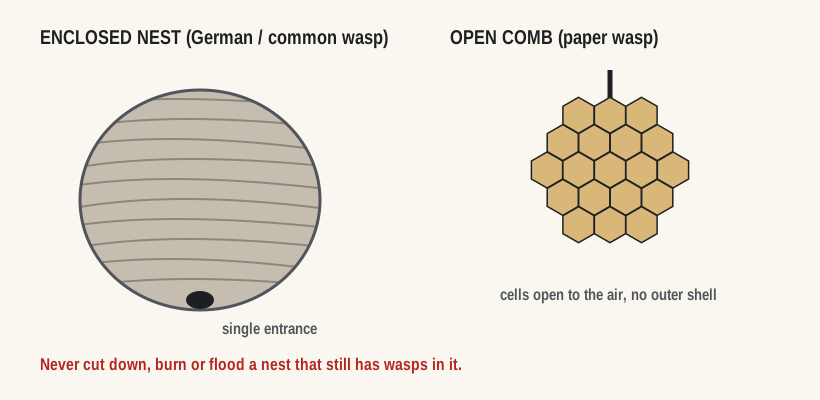
Usually underground, often in a sunny bank or along a stream bank. They also nest in hollow trees, under floors, in roof spaces, eaves and wall cavities. The nest is made from chewed wood fibre, wrapped in a layered paper envelope with one main entrance. A normal nest is about the size of a football. Ground nests, roof nests and wall nests each have their own page.
The German wasp life cycle
In spring a queen comes out of hibernation and starts a nest alone. Once she has a handful of workers she stays inside laying eggs, and the nest grows fast through summer. In late summer and autumn it raises males and new queens. Most nests die in late autumn, but about 10% of German wasp nests in New Zealand survive the winter and can become enormous. Wasp season in Auckland.
How dangerous are German wasps?
Away from the nest, unprovoked attacks are rare. Most stings happen when someone squashes a wasp or one is hiding in food or a drink. Near the nest it is different: a disturbed nest sends out alarm signals and workers attack anything moving within about 7 metres. Wasps can sting repeatedly. First aid for wasp stings.
Why New Zealand has so many
New Zealand's densities are among the highest of these wasps recorded anywhere, thanks to mild winters, plenty of food and no natural enemies. In honeydew beech forest they take more than 90% of the honeydew native birds rely on for months each year. They also rob and destroy beehives.
Questions people ask
Are German wasps common in New Zealand?
Very. German and common wasps are found throughout the country, and New Zealand has some of the highest recorded densities in the world. In Auckland they are the wasps behind most large hidden nests in banks, roofs and walls, and most of the wasps that bother people outdoors in late summer.
How long do German wasps live?
Workers live about 12 to 22 days. Queens live about a year: they are born in late summer or autumn, mate, hibernate over winter and start a new nest in spring. That is why a nest keeps growing all summer. New workers keep replacing the old ones.
Do German wasps die after they sting?
No. Unlike honey bees, wasps don't leave their sting behind and can sting more than once. Landcare Research notes that even a dead wasp's sting can inject venom for a short time, so don't pick up dead wasps with bare hands.
Does Vespex work on German wasps?
Yes. Vespex is a protein bait made for German and common wasps. Only registered approved users can buy it, it goes in raised bait stations, never in a nest entrance, and it works mainly between mid-January and mid-April, when wasps are hungry for protein.
Sources we checked
- Vespula wasps (Manaaki Whenua Landcare Research)
- Wasp identification (Manaaki Whenua Landcare Research)
- Life cycle of a wasp (Manaaki Whenua Landcare Research)
- Wasp FAQ (Manaaki Whenua Landcare Research)
- Wasps (Department of Conservation)
- Vespex FAQ (Merchento)
Last reviewed 2026-10-06.