Straight answerRemoving a wasp nest means killing the colony first, then taking the empty nest away if it can be reached. A pest controller finds the entrance, puts an insecticide dust or spray into it, and the wasps carry it through the nest. Most colonies die within a day. You tell us where the nest is, and we get a local pest controller to call you with a price.
Before anyone arrives
Keep everyone well back from the nest and leave the entrance alone. Wasps near a disturbed German wasp nest attack anything moving within about 7 metres. Note how high the nest is, how many wasps you see going in and out, and whether the nest is out in the open or hidden in the ground, a wall or the roof.
- Bring pets indoors and move their food and water bowls away from the area
- Shut windows and doors on the side of the house nearest the nest
- Mention any household member with a sting allergy
- Don't try fly spray on the entrance first
Step by step: how the nest is treated
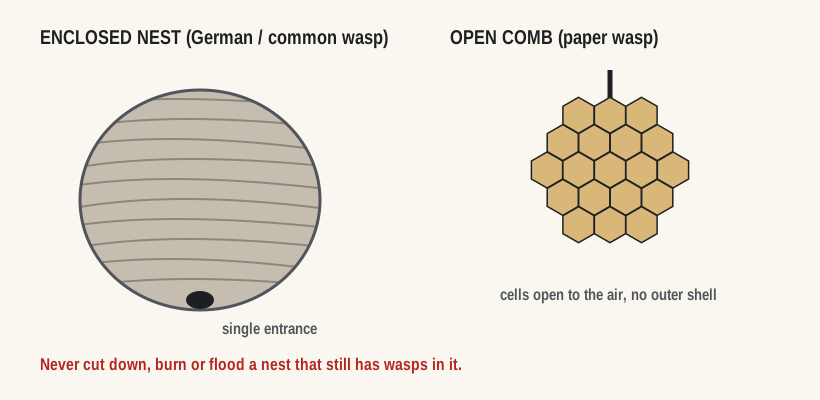
An easy nest in the open is a short job. The pest controller watches the wasps to find the entrance, suits up, and treats the nest directly. Open paper wasp combs can be treated and taken down on the spot. Covered German wasp nests are dusted at the entrance so returning wasps carry it inside.
- Find the entrance. Watching the flight path in daylight shows where wasps go in, even when the nest itself is hidden.
- Treat the nest. A registered insecticide dust or spray goes into the entrance or onto the comb. Dust works well because wasps track it through the whole nest.
- Check it worked. Activity should drop off within hours. Most nests are dead within a day.
- Remove or leave the dead nest. Open combs come down easily. Nests in the ground are left in place. Nests in walls and roofs come out only if they can be reached safely.
Why late in the day?
Wasps stop flying and return to the nest as the light goes, so treating then catches most of the colony at home. The Department of Conservation's own DIY advice is to treat after dark for the same reason. Pest controllers with full protective gear can also work in daylight when the nest is safe to reach.
What happens to the dead nest
With the colony dead, the nest is just chewed wood fibre. Paper wasp combs and nests in hedges or sheds are usually taken away. Ground nests break down where they are. A nest inside a wall or ceiling may be left unless it smells or the space can be opened. Ask about this when you get the quote.
Nests that need extra care
Some nests take more time, gear or care. Nests high up need ladders or roof access. Nests in wall cavities and roof voids can be large and hard to reach. Very big nests that have survived the winter can hold far more wasps than a normal one. Tell us about any of these when you request a price, so the price is right first time.
Roof voids and eaves
Getting to a nest under the roof, and what the ceiling side looks like.
Wall cavities
Finding the nest behind the cladding without opening the wall.
Ground nests
Holes in lawns and banks, and the dogs that find them.
Trees, hedges and sheds
Combs hidden in hedges and balls of paper up trees.
Questions people ask
Will the wasps come back after the nest is removed?
The treated colony won't come back, but a new queen can start a new nest nearby the next spring, especially in a good spot like a dry roof space or sunny bank. If wasps are still busy at the same entrance a day or two after treatment, the nest may not have been fully treated, so tell the pest controller.
Can a wasp nest be removed in winter?
Yes, if it is active. Most German wasp nests die off in late autumn, and an empty nest needs no treatment. In Auckland's mild winters some nests survive and keep growing. Landcare Research says about 10% of German wasp nests in New Zealand make it through winter. An active winter nest is treated the same way.
Does someone have to be home when the nest is treated?
Not always. For a nest outside, the pest controller can often do the job while you are out, once they know exactly where it is and can get to it. For nests inside walls or roofs they will usually need to get inside. Agree this when you book.
Can I knock a paper wasp nest down myself?
It is risky. Paper wasps defend their comb and can sting more than once, and knocking down a live comb sends angry wasps out with no plan to deal with them. The safer options are to have it treated first, or to leave a small nest that is well away from where people walk.
Sources we checked
- Wasps (Department of Conservation)
- Wasp control (Manaaki Whenua Landcare Research)
- Wasp FAQ (Manaaki Whenua Landcare Research)
- Life cycle of a wasp (Manaaki Whenua Landcare Research)
- Yellow-legged hornet flyer (Oct 2025) (Ministry for Primary Industries)
Last reviewed 2026-10-06.