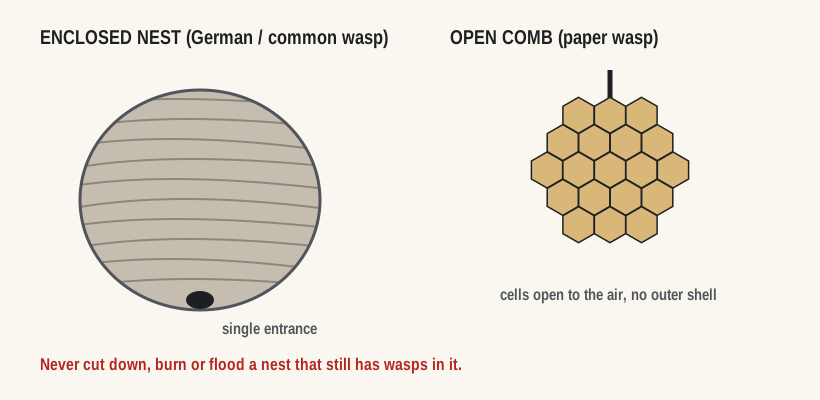
Straight answerMost nests found in hedges, shrubs, fences and sheds are paper wasp combs: open, umbrella-shaped and small. A large covered ball of grey paper in a tree or hollow trunk is different. That is a German wasp nest and needs more care. Either way, stop trimming, back away slowly and have it treated.
Paper wasp combs in hedges and shrubs
Paper wasps hang their combs on a short stalk under leaves, in dense hedges, along fence rails and under shed roofs. The comb is grey-brown with open cells you can see into, usually palm-sized. People mostly find them by trimming a hedge and getting stung. In open lowland country, Asian paper wasps can reach very high numbers of nests. More about paper wasps.
Big covered nests in trees
German wasps sometimes build in hollow trees, inside dense conifers or in tree forks. These nests are covered in layered grey paper and have one entrance. Nests that survive the winter can become huge. In January 2025 a nest about 1.6 metres tall with over 200,000 wasps was treated in a conifer on a South Auckland farm.
Nests in sheds, garages and play houses
Sheds are dry and quiet, which suits both kinds of wasp. Paper wasps fix combs under the roof and inside door frames. German wasps sometimes nest in stored boxes, wall linings or under floors. Open the door slowly, watch for traffic, and don't reach into stored gear if wasps are about. A comb in a children's play house is worth treating straight away.
What not to do
Don't keep trimming, and don't spray the hedge with fly spray or hose it. Wasps follow movement, so walk away steadily rather than flapping. Don't cut down a branch with a nest on it or try to bag a live nest. Burning a nest in a hedge is a fire risk. Mark the spot so nobody else trims or mows there.
How these nests are treated
Open combs are treated directly and taken down in the same visit. Covered tree nests are dusted at the entrance first, then removed once dead if they can be reached. Nests high in trees may need extra gear. Most hedge and shed jobs are at the lower end of the price guide. See how wasp nest removal works.
Questions people ask
What should I do if I disturb a wasp nest while trimming a hedge?
Stop, turn the trimmer off and walk away steadily. Don't flap or run through the hedge. Go inside if wasps follow you. Treat any stings with first aid, and call 111 if someone has trouble breathing or swelling of the face or throat. Mark the spot and have the nest treated before you finish the job.
Can I leave a paper wasp nest in a tree?
A small comb high in a tree, away from paths and play areas, is lower risk and some people leave it. Paper wasps do eat caterpillars. A comb in a hedge you trim, beside a door or near where children play is worth treating, because paper wasps defend their nest and can sting more than once.
Is a big round nest in a tree a hornet nest?
Most likely it is a German wasp nest, but check. Yellow-legged hornets were found on the North Shore in 2025 and build large round nests high in trees. Hornets are 2 to 3 cm long, mostly dark with yellow legs. If you think it is a hornet, photograph it from a distance and report it to MPI's biosecurity hotline, 0800 80 99 66.
Sources we checked
- Asian paper wasp (Manaaki Whenua Landcare Research)
- Asian paper wasp nest (Manaaki Whenua Landcare Research)
- Life cycle of a wasp (Manaaki Whenua Landcare Research)
- Monster nest of over 200,000 wasps destroyed (Jan 2025) (Newstalk ZB)
- Yellow-legged hornet flyer (Oct 2025) (Ministry for Primary Industries)
Last reviewed 2026-10-06.